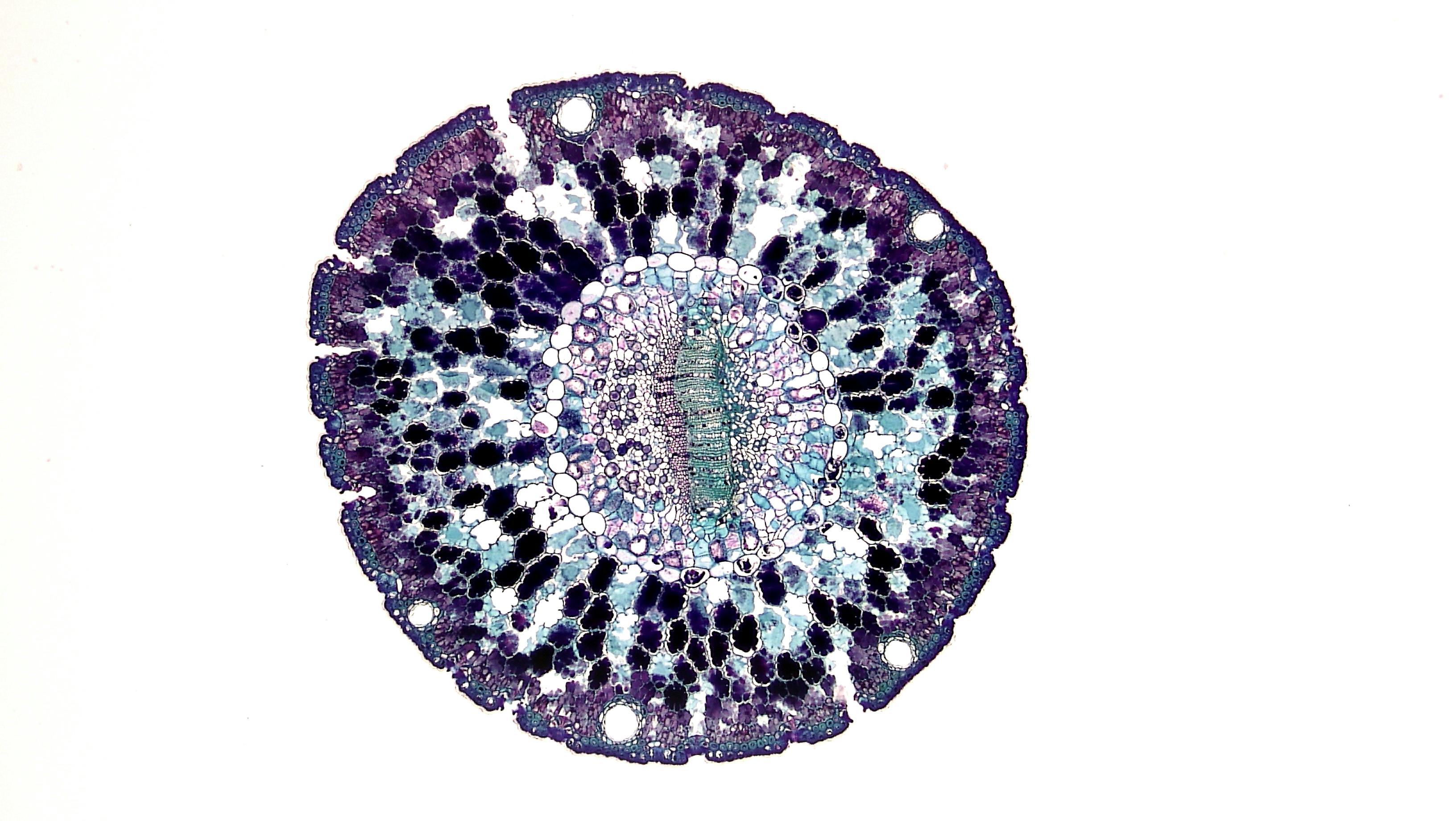

A SINGLE-CELLED ORGANISM WITH ZERO NEURONS CAN LEARN
Inside every neuron is a world we missed.
By Aamir Butt
Blog 4/12 of #QuantumSurvivalTheory series
Here is a fact that should stop you in your tracks:
Paramecium — a single-celled organism with no brain, no neurons, and no synapses — can navigate its environment, avoid obstacles, find food, and learn from experience.
Read that again. An organism with zero neurons can learn. It has no synapses, no neural networks, no action potentials. And yet it processes information, adapts its behaviour, and finds a way through complex environments.
How? With its cytoskeleton. Specifically, with structures called microtubules.
💬 A single-celled organism with zero neurons can navigate, avoid predators, and learn. Its entire brain is its microtubules. Maybe we’ve been looking in the wrong place. #QuantumSurvivalTheory
The Hidden Architecture
Inside every cell in your body, there’s a scaffolding system called the cytoskeleton. Its most prominent components are microtubules — tiny cylindrical tubes made of a protein called tubulin, arranged in beautiful spiral lattices.
For decades, textbooks dismissed microtubules as structural scaffolding — the beams and columns of the cellular building. Their job was to give the cell shape and help with transport. Nobody seriously considered that they might be computing.
But an anaesthesiologist named Stuart Hameroff started asking awkward questions.
The Numbers
Consider the sheer scale of what’s inside a neuron:
The standard model says memory is stored in synaptic connections. Your brain has roughly 100 trillion synapses. That’s an impressive number. But each neuron contains approximately 10 million tubulin protein dimers in its microtubule network. Multiply by 86 billion neurons and you get an information substrate that dwarfs synaptic storage by orders of magnitude.
If microtubules are just scaffolding, evolution made them absurdly overengineered. If they’re computing, the brain is astronomically more powerful than we thought.
The CaMKII Bridge
Here’s where it gets concrete. There’s an enzyme called CaMKII — calcium/calmodulin-dependent protein kinase II. When a synapse fires, calcium floods into the neuron, activating CaMKII. This enzyme then docks onto the microtubule lattice and physically modifies it, phosphorylating specific tubulin proteins.
In other words: synaptic activity writes information onto the microtubule lattice. The synapse is the input device. The microtubule is the hard drive.
And the information flow goes both ways. Changes in the microtubule lattice influence the neuron’s behaviour — modifying synaptic strength, axonal transport, even which proteins get made. The synapse and the microtubule are in constant dialogue.
💬 CaMKII takes synaptic signals and physically writes them onto microtubule lattices. The synapse is the keyboard. The microtubule is the hard drive. Two layers, one system. #QuantumSurvivalTheory
Two Levels, One System
This gives us a radically different picture of the brain. It’s not a network of simple switches. It’s a two-level architecture:
Level 1 — Electrochemical: Neurons firing, synapses transmitting, the level neuroscience has studied for a century.
Level 2 — Intracellular: Microtubule lattices inside every neuron, processing information in patterns of tubulin conformational states, connected to Level 1 through molecular bridges like CaMKII.
These levels are coupled. They talk to each other constantly. And if consciousness is happening at Level 2 rather than Level 1, it would explain why studying Level 1 alone has never closed the explanatory gap.
But there’s a twist. The processing at Level 2 might not be classical. It might be quantum.
And that changes everything.
If organisms without neurons can learn, the story of consciousness must be bigger. See how microtubules change the picture.